

Guide · NCC 2025
NCC 2025 in NSW: what the new building code means for new garage doors
Under NCC 2025, a garage door in an opening not more than 3 m high still has to meet AS/NZS 4505 where the building sits in a named wind region, the same standard now reaches region B2, so more homes are covered, and the edition that covers your job turns on when its approval is lodged.
What changes for new garage doors under NCC 2025?
| NCC 2022 | NCC 2025 | |
|---|---|---|
| Wind regions that trigger the clause | C or D | B2, C or D |
| Opening height | not more than 3 m | not more than 3 m |
| Standard the door is to meet | AS/NZS 4505 | AS/NZS 4505 |
| Map used | Figure 2.2.3: regions A, B, C and D | Figure 2.2.3, revised: region B shown as B1 and B2 |
ABCB: 2.2.4(q) amended to include wind region B2.
Source: ABCB, NCC 2022 Housing Provisions Part 2.2, ABCB, NCC 2025 Housing Provisions Part 2.2, ABCB, list of amendments
If you put the two editions of the garage door clause side by side, one thing widens: the list of wind regions.
NCC 2022, the edition NSW uses until 1 May 2027, calls up AS/NZS 4505 for garage doors in openings not more than 3 m high in the external walls of buildings in "wind region C or D". NCC 2025 keeps the same opening height and the same standard. The trigger now reads "wind region B2, C or D in accordance with Figure 2.2.3".
In our reading of the two clauses, three parts match and one differs. The height limit matches, regions C and D match, and the standard matches. The difference is region B2: the revised map shows the old region B as two regions, B1 and B2, and the clause now names B2 alongside C and D. Region B1 is not named. Western Australia's version of the 2022 clause reads "wind region B, C or D", which is why you may see that wording elsewhere.
The ABCB's list of amendments records the change as "2.2.4(q) Amended to include wind region B2". The same list records Figure 2.2.3 as amended "to reflect revised wind regions". So the clause reaches a region it did not name before. It is the same standard, applied to more homes.
For anyone planning a new door, the advice from Steady Garage Doors is to settle two questions before ordering. Which edition is your job assessed under? Which wind region is your building in?
When does the new building code start in NSW?
- 1
29 July 2025
NCC 2022 Amendment 2 in effect in NSW
- 2
25 March 2026
NSW announces it will adopt NCC 2025
- 3
1 May 2026
NCC 2025 published; ACT, Victoria and WA adopt it
- NSW 12-month transition
- 4
1 May 2027
NSW, Queensland and Tasmania adopt NCC 2025
NT: not adopted
The edition for a job turns on when its certificate application is lodged. Ask your certifier or builder which edition applies to yours.
Source: NSW Government release, NSW Government, how to comply, ABCB, NCC 2025 adoption information
NSW adopts NCC 2025 on 1 May 2027. That gives a 12-month transition after the code was published, according to the government release NSW to adopt new National Construction Code May 2027, dated 25 March 2026. The ABCB's NCC 2025 state and territory adoption information gives the publication date as 1 May 2026. From late October 2026, that leaves a little over six months (our count).
Until then, the current edition is NCC 2022 Amendment 2, in effect from 29 July 2025, according to How to comply with the National Construction Code. The same page notes the NCC is amended every three years.
A new code does not start on the same day everywhere: NSW's date is 1 May 2027, while Victoria, WA and the ACT took NCC 2025 a year earlier. The same ABCB table puts Queensland and Tasmania on NSW's date and shows the NT has not adopted it. It also warns that state variations can change when particular provisions apply.
Which edition will my garage door job fall under?
The edition is set by the paperwork, not the calendar on the day the door goes in. NSW's How to comply page says Complying Development Certificate applications, and most Construction Certificate applications, lodged on or after 29 July 2025 are assessed against NCC 2022 Amendment 2. The edition turns on when the certificate application is lodged.
The same page says the council or registered certifier must be satisfied the plans comply with the relevant edition before issuing a certificate.
If your job's paperwork lands close to 1 May 2027, ask your certifier or builder which edition applies to your job. They are the ones who have to sign it off.
Do new garage doors need to be wind rated?
Which edition? It turns on when the certificate application is lodged. Ask your certifier or builder.
Is the opening in an external wall and not more than 3 m high?
Is the building in a named wind region on Figure 2.2.3? NCC 2022: C or D. NCC 2025: B2, C or D.
Wind region, not N1 to N6 or C1 to C4 class. Council or certifier can confirm the region (AMIA).
Yes to both: the door is to meet AS/NZS 4505.
Source: ABCB, NCC 2025 Housing Provisions Part 2.2, ABCB, NCC 2022 Housing Provisions Part 2.2, NSW Government, how to comply, AMIA wind classification guide
Under the NCC Housing Provisions, the garage door clause applies when two things are true. The first is that the door sits in an opening not more than 3 m high in an external wall. The second is that the building is in wind region B2, C or D on Figure 2.2.3 under NCC 2025, or in wind region C or D under NCC 2022. When both are true, the door is to meet AS/NZS 4505.
The rule is triggered by the wind region of the building on Figure 2.2.3, not by an N1 to N6 or C1 to C4 wind class.
Those classes still matter for other reasons. Our guide Wind ratings decoded explains what they mean.
How do I find out which wind region my home is in?
Wind region
Terrain category
Shielding
Topography
the clause is triggered hereGarage door clause 2.2.4
Site wind class (N or C)
Source: AMIA wind classification guide, ABCB, NCC 2025 Housing Provisions Part 2.2
Don't guess it from a map you found online. AMIA, a manufacturer, says in its wind classification guide that your council or local certifier can confirm your wind region. AMIA also says that if an engineer or certifier has already given a classification, you can use it directly.
AMIA describes Region A as "most of southern Australia" and Region B as "northern coastal areas". Treat that as a manufacturer's broad description, not an answer for your street.
The same AMIA guide lists four site factors behind a wind class: wind region, terrain category, shielding and topography. Of those four, wind region is the only one the garage door clause names.
One more label worth knowing: NCC 2025's Specification 4 for cyclonic areas treats wind regions B2, C and D as "cyclonic areas". Those are the same three regions the garage door clause now names.
Does it change anything for my replacement door?
2.2.4(q) Amended to include wind region B2
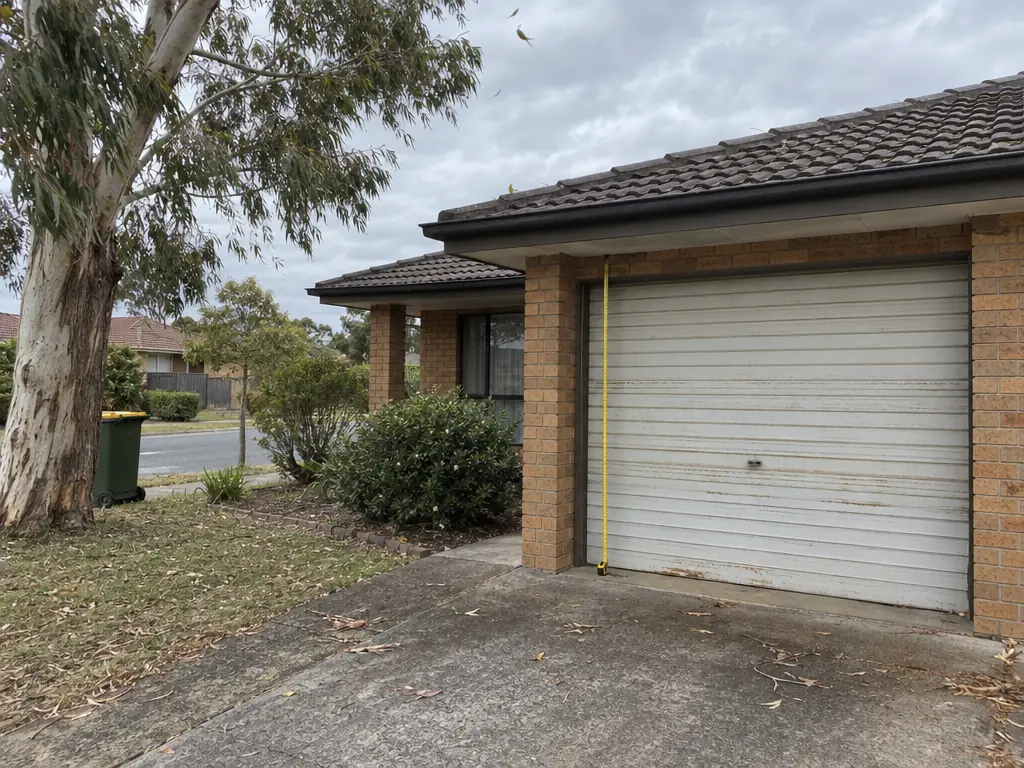
It can, depending on where your home sits. Both editions point to AS/NZS 4505, but NCC 2025 names region B2, which the NSW 2022 clause does not, and the ABCB records the edit as an amendment to include wind region B2. A home in B2 may be covered by the garage door clause for a job assessed under NCC 2025, where it was not under NCC 2022. A home in C or D is covered under both.
Whether a particular replacement goes through a council or certifier at all is a question for your builder or certifier. Their answer also decides which edition matters. If you are swapping out an older door, our guide to replacing an original tilt door covers the practical side.
NSW will add its own changes. The NSW release says NSW plans variations to NCC 2025, all published with the full code. Its examples are waterproofing for apartment remediation and energy efficiency in apartment common areas.
On the Part 2.2 Structural provisions page, the contents list shows NSW variations for other parts and none listed against Part 2.2. That is a contents list, not a ruling. Your certifier is the one to confirm how the NSW version applies to your job.
What should I ask if I'm ordering a door near the changeover?
Source: NSW Government, how to comply, ABCB, NCC 2025 Housing Provisions Part 2.2, AMIA wind classification guide
Three questions cover it:
- Who is lodging the approval for this job, if one is needed?
- Which edition will it be assessed against: NCC 2022 Amendment 2 or NCC 2025? The NSW guidance ties the edition to the lodgement date.
- Which wind region is the building in? If it is one the clause names, what test paperwork will come with the door for AS/NZS 4505?
For what that paperwork looks like and how to read it, see Garage door certification paperwork: what to ask for and how to read it.
NCC 2022 Amendment 2: current NSW edition, in effect from 29 July 2025.
NSW GovernmentNCC 2025: adopted in NSW 1 May 2027.
NSW releaseEdition for a job: set by when the certificate application is lodged; ask your certifier or builder.
NSW GovernmentNCC 2022 trigger: wind region C or D, openings not more than 3 m high.
NCC 2022NCC 2025 trigger: wind region B2, C or D, openings not more than 3 m high. Standard in both: AS/NZS 4505.
NCC 2025
Ready to plan a new door?
If a new garage door is on your list for the next six months, start with your address and the size of the opening. Then put the three questions above to your certifier or builder.
When you're ready, send Steady Garage Doors an enquiry with those details and the door you have in mind. We'll talk it through with you from there.
Sources
- https://www.nsw.gov.au/ministerial-releases/nsw-to-adopt-new-national-construction-code-may-2027
- https://www.nsw.gov.au/housing-and-construction/compliance-and-regulation/how-to-comply-national-construction-code
- https://ncc.abcb.gov.au/ncc-2025/ncc-2025-state-and-territory-adoption-information
- https://ncc.abcb.gov.au/editions/ncc-2025/adopted/housing-provisions/2-structure/part-22-structural-provisions
- https://ncc.abcb.gov.au/editions/ncc-2022/adopted/housing-provisions/2-structure/part-22-structural-provisions
- https://ncc.abcb.gov.au/editions/ncc-2025/adopted/housing-provisions/front-matter/list-amendments-abcb-housing-provisions
- https://www.abcb.gov.au/editions/ncc-2025/adopted/volume-one/b-structure/4-design-buildings-cyclonic-areas
- https://amia.com.au/resources/wind-classification-guide
Pictures in this guide are illustrations, not photos of our jobs.